Computational Thinking

In today’s digital age, computational thinking is a crucial way of thinking that helps students understand and solve complex problems. It builds skills like logical reasoning, analysis, and creativity. It’s not just about preparing them to be future scientists or engineers; it’s about helping them become effective problem solvers and creative thinkers in modern society.

Computational thinking isn’t just tied to coding; it’s about breaking problems down into smaller parts, spotting patterns, and coming up with effective solutions.

Online Self-Learning Course and Workshop

The “Computational Thinking” programme offers an Online Self-Learning Course and Online Workshop. Participants can train their logical thinking by learning micro:bit programming flexibly at their own pace or through real-time tutor-led sessions, reinforcing computational thinking and enhancing problem-solving and application skills.

Online Self-Learning Course

Course Outline

Computational Thinking Course 2025/26

  • Module 1: Introduction to Computational Thinking
  • Module 2: Utilising Computational Thinking to Solve Problems
  • Module 3: Creating a Weather Application Using App Inventor
  • Module 4: Computational Thinking, Visual Programming, and Programming Languages

Online Workshop

Format: Online Zoom Live
Language: Cantonese
Fee: Free of charge

Registration:

Remarks:
  • A computer or a tablet running on either Windows, MacOS, iPadOS or Android operating system will be required
  • Electronic certificate will be presented to students with over 75% attendance
  • Login URL and password of the workshops will be delivered to participants through email

Workshop Outline

Computational Thinking Online Workshop 2025/26 - Semester 1


Brief Introduction:

This online workshop will systematically cover micro:bit programming skills, starting from basic animation creation and gradually advancing to sensor applications, logical reasoning, and developing distant communication applications. Students will hands-on create interactive games, reaction tests, and messaging systems, fully mastering computational thinking and core programming abilities, thereby laying a foundation for innovative technology applications.


Workshop Details:

Date: 6 Nov, 13 Nov, 20 Nov & 27 Nov 2025 (Thu)
Time: 16:30-18:00


Content:

Session 1
  • Introduction to micro:bit
  • Create simple display and animation programs
Session 2
  • Introduction to elements like accelerometer and compass
  • Create user input triggered programs
Session 3
  • Understand loops and conditional statements
  • Create reaction time and virtual traffic light programs
Session 4
  • Understand distant communication programs
  • Create messaging and rock-paper-scissors programs
Target

Upper Primary and Junior Secondary Students (with an EdCity account)

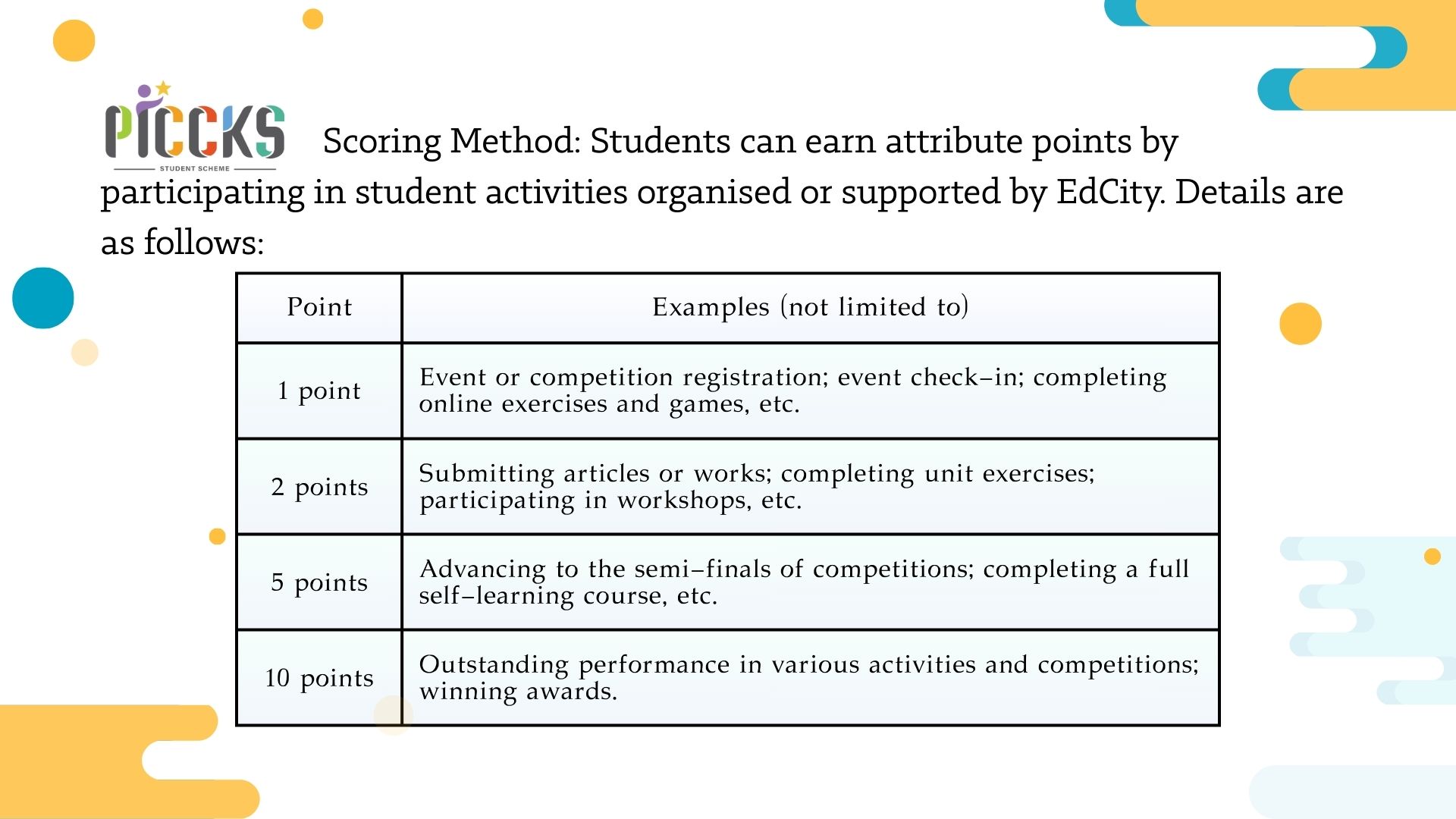
PICCKS Scoring Method

Innovation and Creativity Communication and Collaboration Knowledge and Skills
Complete each Online Self-Learning Course Module ✓ (Students can earn PICCKS points by completing different tasks or activities in the programme.)
Complete each Online Self-Learning Course
Participate in each Online Workshop
For details regarding the scoring method of the PICCKS Student Scheme, please refer to this link. If students wish to check the details of their points earned for the current year, they can go to “My PICCKS” to view their score records.

Enquiries

About Online Self-Learning Courses and Workshops:
derek.kun@hkecl.net
2624 1087

Technical Support:
info@edcity.hk